Girls Flag Football Training in Northern Virginia: Speed and Separation That Wins Games
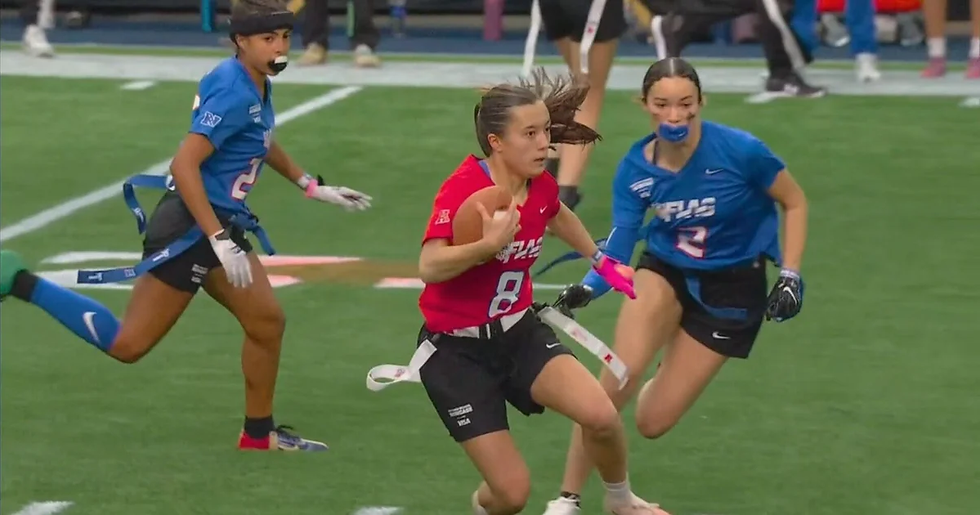
Most girls flag players do not need more plays. They need more separation.
When I watch high school flag football, the difference is usually not the playbook. It is the first three steps. It is how fast a player can start, stop, and start again. It is whether she can catch the ball clean, stay composed under pressure, and finish the play.
That is what I train.
At Command Football Academy, I coach athletes to become faster, more technically sound, and more confident in the moments that decide games. In girls flag football, those moments come down to speed and separation.
Why Separation Wins in Flag Football
Flag is space and timing. If you can create a step of separation, you change everything for your quarterback.
Separation comes from a few simple skills:
Explosive first steps
Clean change of direction
Controlled tempo and body position
Reliable hands
Confidence to finish the play
A lot of athletes want to jump straight into “routes.” I get it. Routes are fun. But in flag football, routes only matter if you can move well enough to create space. If you cannot start and stop under control, the defense stays attached. If you cannot catch, the drive ends.
So we build the player first, then we layer concepts.
The Foundation: Speed Is a Skill
Speed is not just genetics. At the high school level, speed becomes a trainable skill when you focus on mechanics and repeat them with standards.
When I train girls flag athletes, speed starts with:
Posture: tall, stacked, balanced
Rhythm: smooth acceleration, not reaching
Arms: intentional, not chaotic
Foot strike: under the hips, not out in front
Most “speed training” fails because it turns into conditioning. If an athlete is tired, mechanics break down. Then you are practicing bad movement.
In our sessions, we protect quality:
Short sprints
Full recovery
Clean reps
Consistent coaching cues
That is how speed shows up on game day.

Change of Direction: Where Flag Games Are Won
Flag football is not straight-line speed. It is acceleration into space, braking, and re-acceleration. That is change of direction. That is where most separation comes from.
We train three things:
1) Deceleration
If an athlete cannot slow down under control, she cannot create separation on breaks. She drifts. She slips. She rounds cuts.
I coach:
Hips down
Chest stable
Feet under control
Eyes up
2) Re-acceleration
After the break, the next two steps matter. That is the separation window.
We build the habit of:
Planting with purpose
Pushing out of the cut
Getting back to speed fast
3) Spatial awareness
Flag is angles. If you run to the same spot every time, the defense learns you. Great players understand leverage and grass. They know how to move defenders, not just run patterns.
Catching and Hand-Eye Coordination: Nothing Happens Without It
Flag football rewards teams that can complete routine passes. That is not flashy. It is winning football.
Catching is a skill:
Eyes track early
Hands present late
Secure the ball first
Then transition into a runner
I also care about hand-eye coordination because it is one of the best long-term investments for young athletes. You can see it in multi-sport kids. Baseball and softball athletes often track the ball well because they have spent years reading flight, timing, and reaction. That skill transfers.
For flag football, that means we train:
Stationary catches for mechanics
Catches on the move for timing
Reaction catches for real game speed
Contested catches with calm eyes and strong hands
A player who can catch reliably earns targets. Targets build confidence. Confidence changes how she plays.
Separation Skills: Simple Releases That Work
You do not need a bag of tricks. You need one or two reliable ways to win.
At the high school flag level, separation often comes from:
A clean jab step
A hip snap and go
A strong body lean into space
A sudden stop that does not drift
I teach athletes to avoid wasted movement. No dancing. No extra steps. One move, then go.
We also work on tempo. Great flag athletes do not run every rep at the same speed. They change pace to move defenders, then burst out when it matters.

Run After Catch: Turn Short Gains Into Big Plays
Flag football is built for yards after catch. A five-yard completion can become a touchdown when an athlete has two things:
Ball security
One clean move in space
We train run after catch with simple rules:
Secure first, then accelerate
Get vertical when it is there
Make one defender miss, then go
Protect the ball through contact and traffic
This is also where confidence shows up. Athletes who trust their movement and their hands play faster.
What This Looks Like Week to Week
A lot of parents ask, “What should she be doing each week?”
Here is a simple, realistic structure for high school girls flag athletes:
2 days per week: speed and change of direction
1 to 2 days per week: catching and skill work
1 day per week: strength basics and injury prevention
Daily: short mobility and recovery habits
You do not need seven days. You need consistency and quality.
What Coaches Notice First
If you are a parent reading this, here is what I see most coaches value right away:
Reliable hands
Speed and separation
Coachability and effort
Toughness without drama
Understanding spacing and assignments
If you are a coach reading this, you already know the truth: the athlete who can separate and catch is always playable.
That is the goal. Make the athlete playable in any situation.
Final Thought
Girls flag football is growing fast in Northern Virginia, and that is a good thing. But growth brings noise. A lot of advice. A lot of random training.
I keep it simple.
Speed and separation.
Catching and confidence.
Fundamentals that hold up when the game speeds up.
If an athlete can start fast, stop clean, catch the ball, and finish the play, she will always have a place on the field. That is how you win more reps, earn more trust, and build a game that lasts.
About Me - Jay Glaspy

I’m a U.S. Army Special Forces Veteran and youth football coach who now leads with a different mission—developing young athletes here in Northern Virginia. As the founder of Command Football Academy, I help kids get faster, stronger, and more confident through effective coaching built for their age and experience level.
My coaching approach blends football fundamentals, speed development, and character-building. We train for football, but we’re really preparing for life—teaching discipline, leadership, resilience, and teamwork. Every athlete who trains with CFA becomes a better football player and a stronger, more confident young person—on and off the field. Connect here -> contact@commandfootballacademy.com


Comments